Review: Queen of the Pickleball Court Design
As a designer who spends more time at the hoop than away from it, I am always on the lookout for graphics that translate well from screen to stitch. When I first pulled up the Queen of the Pickleball Court file, my immediate reaction was one of cautious optimism. In the world of Print Templates and Graphics, there is often a disconnect between what looks crisp on a digital mockup and what actually holds up under the needle. This review breaks down how this specific design performs when moved out of the planner or scrapbook context and into the realm of real-world machine embroidery design projects.
First Impressions and Visual Personality
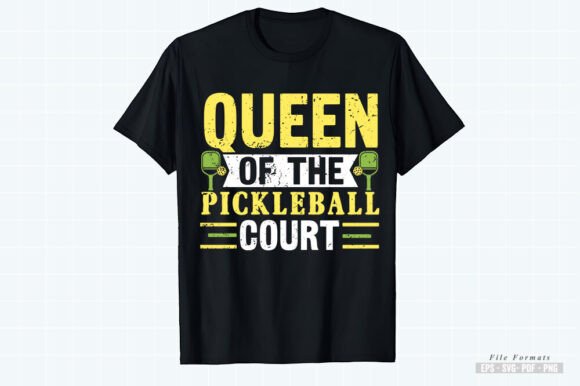
The mood of the Queen of the Pickleball Court graphic is playful yet assertive, capturing the spirited energy of the sport without feeling overly aggressive. Visually, the layout appears balanced, with a clear focal point that suggests royalty mixed with athletic fun. For an embroidery project, this kind of visual personality is crucial. It needs to read clearly from a distance, whether it is on a tote bag hanging in a boutique or a sweatshirt worn at the local courts.
When evaluating the line work and shape, I look for potential trouble spots. Does the design rely on tiny, intricate details that might get lost in thread buildup? Is the spacing between elements wide enough to prevent bird-nesting? With this particular asset, the shapes seem robust enough to handle conversion into an embroidery file, provided the digitizer respects the original flow. The theme lends itself beautifully to a mix of satin stitch for bold outlines and fill stitch for solid areas, creating a textured finish that feels premium rather than flat.
Real-World Application: The Custom Tote Scenario
To truly test the viability of this design, I imagined a specific client request: a custom embroidered tote bag for a local pickleball tournament prize package. This is a common scenario for Etsy sellers and craft business owners. The goal was to create a handmade product that felt exclusive and high-quality.
In this context, the Queen of the Pickleball Court motif shines. Placed centrally on a canvas tote, the design offers ample space for the "royal" elements to breathe. Unlike a small pocket on a cap, a tote bag allows for a larger hoop size, which means we can preserve the integrity of the original graphic's details. If this were a dense applique design, the canvas would support the weight well. However, even as a direct stitch, the visual impact on a neutral fabric background would be striking. Customers receiving this as a personalized gift or tournament swag would likely perceive high value because the design avoids looking like a generic clip-art slap-on.
Versatility Across Products
Beyond totes, this graphic has legs for various custom apparel items. Imagine it centered on the chest of a heather grey sweatshirt embroidery project. The contrast potential here is excellent. It could also work as a baby embroidery piece on a onesie, though scaling would be critical. For holiday embroidery gifts, pairing this with festive thread colors could create a unique seasonal item for the sports enthusiast in the family.
For those running a small shop product line, this design could serve as a signature logo for a series of embroidered patch creations. Patches are trending, and a strong graphic like this translates well to a merrowed edge finish. It also fits nicely into commercial embroidery workflows for local clubs looking to brand their gear without resorting to boring text-only logos.
Technical Considerations and Fabric Challenges
While the design concept is strong, practical execution requires vigilance. Not every surface is ready for this level of detail. If you are working with textured fabrics like thick towels or waffle weave, the finer lines of the "Queen" crown or paddle details might get swallowed by the fabric pile. In these cases, increasing the stitch density or adding a heavier underlay is non-negotiable.
Similarly, caution is needed with stretchy fabric. If you attempt this on a performance poly shirt, the lack of stability could cause registration issues, especially if the design features tight corners or small lettering. A high-quality cut-away stabilizer would be essential here to prevent distortion after washing. Dark fabrics present another challenge; if the original Graphics file relies on light colors for definition, you must ensure your thread colors provide sufficient contrast. Testing the design in black and white mockups before stitching is a smart move to verify readability.
Curved surfaces, such as caps, require careful hooping. The center of the design must align perfectly with the cap's seam to avoid a skewed appearance. If the design has dense areas, the stiffness might make the front panel of a cap uncomfortable, so checking the stitch density during the digitizing phase is vital.
Enhancing Brand Value and Customer Trust
Ultimately, the choice of design affects your brand consistency. Using a well-thought-out graphic like Queen of the Pickleball Court signals to buyers that you care about aesthetics and relevance. It boosts buyer engagement because it taps into a specific community passion. A sloppy or poorly adapted design erodes trust, but a clean, professionally executed embroidery project reinforces your reputation as a skilled maker.
For digital product sellers offering printable mockups, showing this design stitched on various items can significantly increase sales. It helps the customer visualize the finished product. Whether used for decorations, card making, or actual stitching, the versatility adds value to your design assets.
Designer Notes for Success
Before committing to a production run, follow these practical steps:
- Test on Scrap: Always stitch a sample on the exact fabric type you intend to sell. What works on cotton may fail on polyester.
- Check Licensing: Since this originates as a Print Template, confirm the license terms. Ensure you have the rights to use it for commercial embroidery and selling physical goods.
- Review Density: If digitizing yourself, watch out for overly dense fills that can cause puckering.
- Contrast Check: Verify that your chosen thread colors pop against the garment color.
- Inspect Details: Look closely at small corners and text. You may need to simplify tiny elements for better stitch clarity.
In conclusion, the Queen of the Pickleball Court design holds significant promise for creative entrepreneurs. With the right technical approach and material selection, it can elevate a simple tote bag design or sweatshirt into a standout piece that resonates with the pickleball community. It is a reminder that great embroidery starts with a great image, but finishes with thoughtful execution.