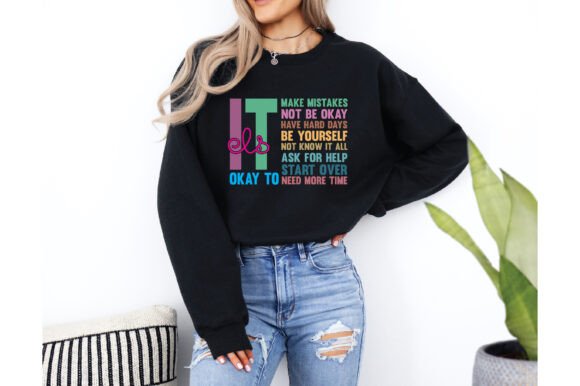
Review: It s Okay to Make Some Mistakes Shirt Design
As a designer who spends more time staring at stitch maps than most people care to admit, I approach every new machine embroidery design with a mix of curiosity and skepticism. We all know that what looks crisp on a screen can turn into a puckered mess on fabric if the digitizing isn't up to par. Recently, I got my hands on the It s Okay to Make Some Mistakes Shirt graphic to evaluate its potential for real-world application. While the product listing highlights its versatility as a high-resolution file ready for printed t-shirts, mugs, and stickers, my focus was strictly on how this theme translates into a tangible, stitched handmade product.
The Visual Personality and Mood
The first thing that strikes you about this concept is the mood it creates. In a world of perfectionist crafting trends, a design that embraces imperfection feels refreshingly human. The layout suggests a casual, hand-lettered aesthetic that naturally lends itself to satin stitch or a textured fill stitch to mimic the look of ink on paper. For an embroidery project, this is excellent news because it allows for some organic movement in the stitching without looking like an error. The visual personality is warm, encouraging, and slightly whimsical, making it an ideal candidate for items meant to bring comfort rather than just display status.
When considering this as part of a broader collection of T-Shirt Designs or Graphics, the simplicity of the message ensures high readability. However, for us embroiderers, the challenge lies in maintaining that "imperfect" charm while ensuring the technical execution remains professional. The design needs to look intentionally relaxed, not sloppy.
Real-World Application: The Custom Tote Scenario
To truly test the viability of this design, I imagined a specific real-life scenario: creating a custom gift set for a local art teacher. Teachers often deal with the chaos of creative classrooms, so a tote bag featuring this message would be both practical and emotionally resonant. I envisioned using a heavy-weight canvas tote bag design base, which provides enough stability for dense stitching.
In this context, the It s Okay to Make Some Mistakes Shirt motif works beautifully. On a canvas tote, you have the freedom to use thicker threads and perhaps even incorporate a running stitch outline to enhance the hand-drawn feel. The reaction from the end-user—the teacher—would likely be one of immediate connection. It's not just a bag; it's a permission slip to be human. This kind of emotional resonance is what drives sales for Etsy sellers and boutique owners. It transforms a simple custom apparel item or accessory into a meaningful personalized gift.
Beyond totes, this design shines on sweatshirt embroidery. The cozy nature of fleece or French terry pairs perfectly with the comforting message. Imagine a small shop product line featuring hoodies for new parents or students; the design acts as a gentle reminder during stressful times. For holiday embroidery gifts, such as a Christmas morning outfit for a child who is learning to write or draw, the theme is incredibly appropriate.
Technical Considerations and Fabric Choices
While the sentiment is universal, the execution requires careful planning. One of the critical factors when adapting a print-ready graphic into an embroidery file is understanding stitch density. If the original artwork has solid blocks of color, translating those directly into fill stitches can result in a stiff, cardboard-like texture on the finished product. For garments like t-shirts or baby clothes, this is a dealbreaker.
If you are planning to use this on stretchy fabrics, such as a jersey knit tee or baby embroidery items, you must pay close attention to your stabilizer choice. A cut-away stabilizer is often safer than tear-away for designs with significant coverage to prevent distortion after washing. Furthermore, if the design includes tiny lettering or intricate corners, these areas can easily become muddy if the thread colors do not have enough contrast against the fabric texture.
There are also limitations regarding hoop size. If you intend to place this on a curved surface like a cap or a structured hat, you need to verify that the design fits within a standard cap frame without losing detail. Curved surfaces distort designs differently than flat ones, and text-heavy layouts can sometimes appear warped if not centered perfectly. Similarly, on dark fabrics, you may need to adjust the underlay or add a backing layer to ensure the colors pop, otherwise, the message might get lost in the shadows of the material.
Value Proposition for Craft Businesses
For craft business owners and creative entrepreneurs, the value of a design like this extends beyond the stitch count. It touches on brand consistency and customer trust. Selling a product that acknowledges the struggle of creativity builds a community around your brand. It tells your customers that you understand their journey. This is particularly powerful for commercial embroidery projects targeting makers, artists, and writers.
However, professionalism is key. Even though the message is about mistakes, the product itself must be flawless. Poor tension, visible jump stitches, or puckering will undermine the message. The visual appeal relies on the contrast between the relaxed font style and the precision of the machine work. When done right, it enhances the perceived value of the item, allowing you to price it as a premium small shop product rather than a generic commodity.
Practical Designer Notes for Implementation
Before committing this design to a client's garment or listing it in your online store, there are several practical steps you should take to ensure success:
- Test on Scrap Fabric First: Never skip the stitch-out test. Use a fabric similar to your final product to check for pull and distortion.
- Check Thread Color Contrast: Ensure the thread stands out against the background fabric, especially if selling on dark-colored apparel.
- Review Stitch Density: If the design feels too heavy, consider asking your digitizer to reduce the fill density or using a lighter weight thread.
- Confirm Hoop Size: Measure the design dimensions against your available hoops to avoid last-minute resizing issues.
- Inspect Small Details: Zoom in on the digital preview to see how sharp turns and small letters are handled.
- Mockup Verification: Test the design in black and white mockups to ensure the shape holds up without relying on color.
- Licensing Check: Since the source files include formats like AI, SVG, and EPS intended for printing, verify the license terms before using them for commercial embroidery. Ensure you have the rights to sell the finished product or if the license is restricted to personal use only.
The It s Okay to Make Some Mistakes Shirt design offers a wonderful opportunity to create products with heart. Whether you are making an embroidered patch for a jacket, a pillow cover for a craft room, or a kitchen towel for a baking enthusiast, the potential is vast. Just remember that while the message forgives errors, your craftsmanship should aim for excellence. By combining this relatable theme with high-quality stitching techniques, you can create design assets that resonate deeply with your audience and stand the test of time in their daily lives.